
Will the top look flat by noon? Will your barber know what “textured” actually means? Those two worries stop most guys from asking for this cut.
Here’s the short answer. The best mid taper fade with textured fringe styles are the classic, choppy, volume, blowout, wavy, curly, side-swept, design, crop, quiff, messy fluffy and coily versions below. Pick by hair type first, then check your face shape.
Straight and thick hair suits a classic or choppy top, wavy and curly hair does best with the natural versions, and fine hair needs a light cut. The mid taper keeps the sides tidy while a point-cut fringe supplies the texture, which gives you a modern mid taper fade haircut that looks easy. Below you’ll find 12 styles, a barber script with guard numbers and a quick styling routine.
12 Best Mid Taper Fade Textured Fringe Styles
These styles run from barely-there texture to bold and piecey. Each one lists who it suits, because the same cut can look sharp on thick hair and sad on thin hair.
Think of this list as a menu for the best mid taper fade haircut for your head. You don’t need to match a photo exactly. You just need to know which direction fits your hair.
Classic Textured Styles
Classic styles keep the texture subtle. They’re the safest first step if you’ve never asked for a textured top before.
Both styles below suit mid taper fade for men who want something clean for work and relaxed for weekends.
1. Classic Textured Fringe

The barber point-cuts the ends of the fringe so it breaks into light, natural pieces. Length usually sits around 2 to 3 inches (5 to 8 cm) at the front. The mid taper on the sides stays clean and simple.
It’s best for straight or medium density hair. Fine hair works too if you use a light texture spray.
Picture a guy who wears a button-up five days a week. He wants a haircut that looks neat at a desk and doesn’t need a mirror check every hour. This is that cut.
2. Choppy Textured Fringe bk

Heavier point-cutting makes the fringe obviously uneven and piecey. It looks more deliberate than the classic version. Many mid taper fade hairstyles on thick hair use this approach.
It’s best for thick or medium-thick hair. Thin hair can end up looking gappy.
Pro tip: ask your barber to change the cutting angle across the fringe. If every piece comes out the same length, the top starts to look like a pattern instead of natural texture.
Volume-Focused Variations
Volume styles lift the hair at the root before the texture takes over. You’ll see more height and a fuller silhouette.
Expect to use a blow dryer. Five minutes in the morning makes the difference.
Must Read This 15 Best Taper Fade Designs: Lines & Patterns for 2026
3. Textured Fringe with Volume

You blow dry the fringe upward at the roots, then let it fall forward. That lift gives you height a flat textured fringe can’t match. A light volumizing product helps it hold through the day.
It works best on thick or medium density hair. It also suits anyone who wants a bolder, more structured look.
One warning. If you skip the dryer, this style collapses into the classic version. That’s not a disaster, but it isn’t what you asked for.
4. Textured Fringe with Blowout
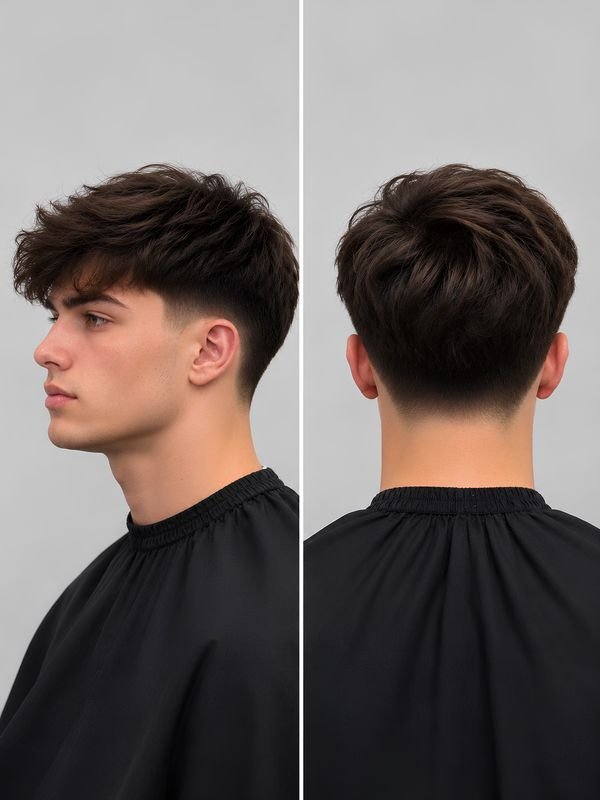
Here the volume covers the entire top, not just the front. The result is a fuller shape from every angle. For more on building height, see our mid taper fade blowout guide.
You need decent length on top, usually 3 to 4 inches (8 to 10 cm). Thick hair gives the best result.
A blowout also pairs well with a skin-close taper, because the contrast makes the top look even bigger.
Wavy and Natural Texture Styles
These styles let your natural hair do most of the work. You need less product, and the finish looks softer.
They suit guys who want texture without a long routine.
5. Wavy Textured Fringe

Natural waves add movement and separation to the fringe. That’s why mid taper fade wavy hair needs so little product. A light sea salt spray can sharpen the wave if it looks tired.
It’s best for wavy hair and a relaxed, low-effort finish. The taper stays the same as the classic version.
Let the hair air dry about 80 percent, then scrunch in a small amount of paste. Don’t comb it. Combing turns waves into frizz.
6. Curly Textured Fringe
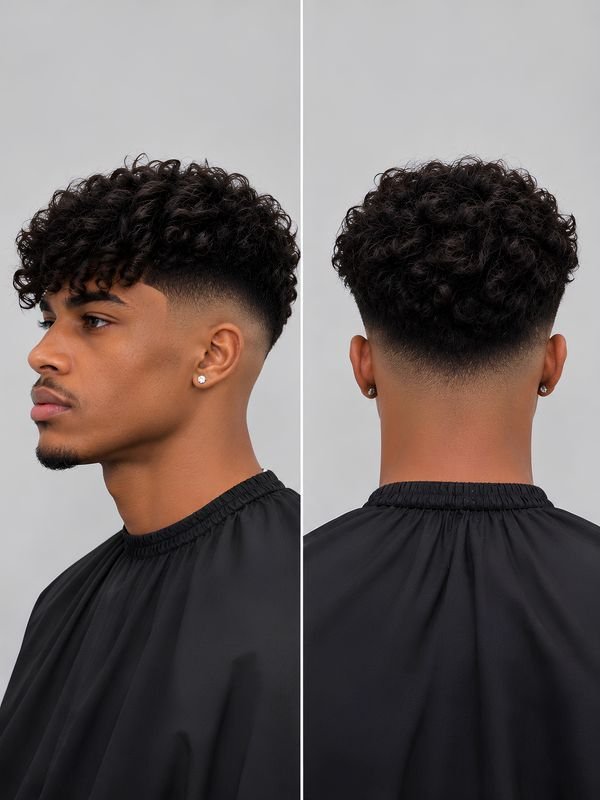
Curls create texture and separation by themselves. For mid taper fade curly hair, the fringe usually needs to stay shorter so the curl pattern shows. Around 2 inches often works. For curl-specific advice, see our mid taper fade curly hair guide.
This is also the best base for a mid taper fade with curly top. The taper gives sharp edges, and the curls give the personality.
Use a curl cream on damp hair and skip the brush. Dry brushing breaks up the curl clumps and puffs everything out.
Detail and Combination Styles
These styles add direction or a design to the piecey top. They suit guys who already feel comfortable with a standard textured fringe.
They ask a bit more from your barber, so bring a reference photo.
7. Side-Swept Textured Fringe
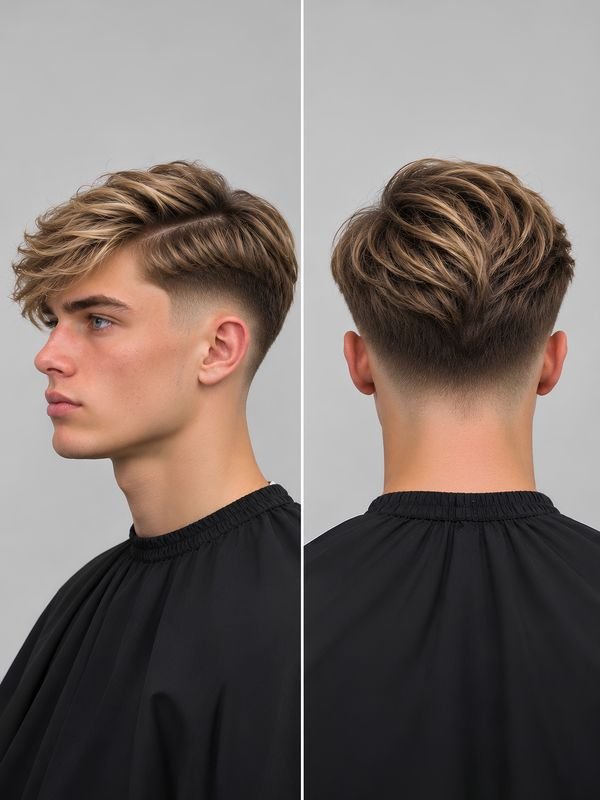
The fringe moves to one side instead of falling straight forward. That adds structure, and it’s a natural fit for a mid taper fade with side part. It works especially well in formal settings.
It’s best for straight or wavy hair. Round, oval and square faces all handle it well.
A hard part line is optional. If you want one, ask your barber to shave it in lightly and keep the rest of the top soft.
8. Textured Fringe with Design

A shaved line or pattern cut into the taper adds edge under the piecey top. It’s the easiest way to make a mid taper fade with design look personal. For placement and depth, see our mid taper fade with design guide.
It’s best for straight or thick hair. Keep the top simple so the design doesn’t fight the texture.
Designs fade as hair grows. Expect the lines to soften in about one to two weeks, so book your touch-up around any event.
Cropped and Lifted Styles
These two styles are new additions for 2026. One keeps things short and the other builds height at the front.
Both give you more options if you’ve outgrown the basic fringe.
9. Textured Crop Top

The top stays short, about 1 to 2 inches (2.5 to 5 cm), and the fringe is cut forward and roughed up with clay. This is a smart pick for mid taper fade short hair. It also grows out slowly, which saves money.
It works on straight or thick hair. It’s also a good choice if your crown is thinning, because short hair hides gaps better than long hair.
Ask for point-cutting on the front edge only. That gives you texture without losing the clean crop shape.
10. Textured Quiff

The front lifts up and back instead of hanging down. A mid taper fade with quiff looks looser and more natural than a sculpted pompadour. A mid taper fade with pompadour is taller and sweeps back with more shine and structure.
You need about 3 to 4 inches on top. Blow dry the front up, then finish with matte clay for the textured edge.
The quiff suits oval and square faces. If your forehead is already tall, keep the lift modest.
Messy, Fluffy and Coily Styles
These styles go for a soft, lived-in feel. They look casual, but the cut underneath still needs to be right.
They cover hair types the usual lists skip.
11. Messy Fluffy Textured Fringe

This one is airy and a little undone. It’s the go-to for a mid taper fade with messy top or a mid taper fade with fluffy hair. A pre-styler and a texture spray give it body without weight.
It suits fine to medium hair. The goal is volume with soft movement, not stiffness.
Don’t reach for heavy wax. It weighs fluffy hair down and kills the whole point.
12. Textured Fringe for Black Men
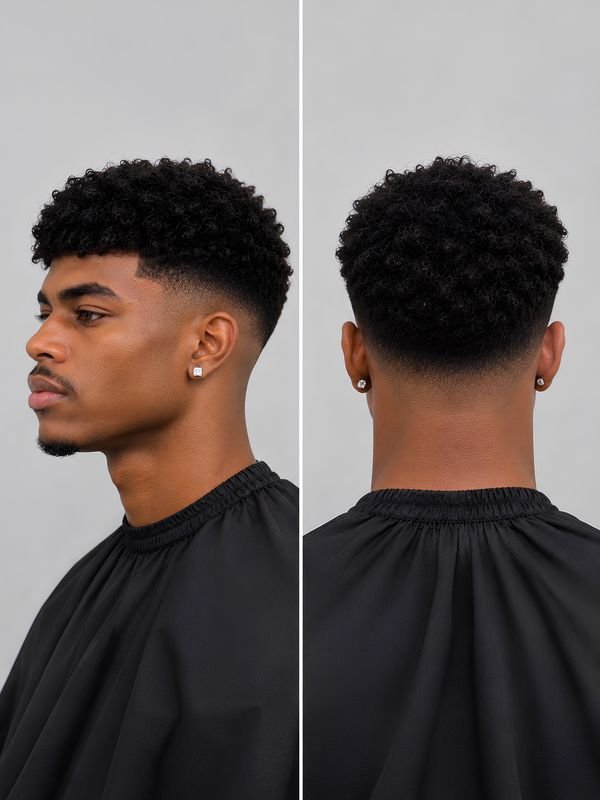
Coily hair holds texture naturally. A mid taper fade black men can wear with a textured top often uses a 2 to 3 inch fringe styled as a twist-out, finger coils or a soft brush-out. The mid taper keeps the sides sharp.
Choose a barber with real experience cutting coily hair. Many cut it dry so they can see how it actually sits.
Moisture matters here. Use a leave-in conditioner or curl cream, because dry coily hair looks dull and breaks.
Mid Taper Fade Textured Fringe Explained: What Makes the Texture Work
A mid taper fade with textured fringe pairs a mid-height taper on the sides with a fringe cut to look piecey and uneven instead of smooth and blunt. The texture comes from point-cutting at the barber’s chair and a matte product at home. Together they break the fringe into separate pieces.
One quick note on terms. A taper shortens the hair gradually and usually leaves a little length at the sideburns and neckline. A fade blends down to skin. “Mid” means the blend starts around the temple, roughly halfway up the side of your head.
Why Textured Fringe Is Still Everywhere in 2026
There’s no magic statistic here, just a few reasons the style keeps showing up in barbershops. It looks effortless, but it still looks cared for. Most guys want exactly that balance.
It also works on more hair types than a blunt fringe does. Straight, wavy, curly and thick hair can all wear it, which is why trendy mid taper fade hairstyles 2026 lists keep featuring it.
Mid Taper vs Low Taper vs High Taper vs Mid Fade
The height of the taper changes how bold the cut feels. If you’re deciding on a mid taper fade vs low taper fade, think about how much contrast you want. Lower looks subtler. Higher looks sharper.
A mid taper fade vs high taper fade comparison works the same way. High starts near the upper temple and makes the top look bigger. Mid sits in between, so it works for most faces.
The mid taper fade vs mid fade question is about the skin. A mid fade goes down to bare skin. A mid taper leaves a little length at the edges, which feels softer and grows out better.
| Cut | Starts around | Look |
|---|---|---|
| Low taper | Near the ear and neckline | Subtle, easy to wear anywhere |
| Mid taper | The temple | Balanced, clean, works for most faces |
| High taper | The upper temple | Bold, high contrast |
| Mid fade | The temple, down to skin | Sharper, needs more upkeep |
Pros and Cons: What You’re Signing Up For
This cut gives you a relaxed, lived-in look, but the texture depends on a skilled barber and daily product. Here’s the honest trade-off.
| Pros | Cons |
|---|---|
| Casual, effortless finish | Needs a barber who can point-cut well |
| Works on straight, wavy, curly and thick hair | Daily product is almost required |
| Softer than a blunt fringe | Very fine hair can struggle to hold separation |
| Suits most face shapes | Grows out less predictably than a blunt cut |
| Matte finish looks current | Too much product turns greasy fast |
Choosing by Hair Type: What Actually Holds Texture
Your hair type decides how much product and cutting you need. Straight, wavy, thick, curly, fine and coily hair all hold separation differently.
Straight Hair
Straight hair has no natural separation, so it needs the most help. Point-cutting plus a matte clay does the heavy lifting. For more detail, see our mid taper fade straight hair guide.
Mid taper fade straight hair looks best with a fringe around 2 to 3 inches. Shorter than that and you lose the piecey effect.
Wavy Hair
Wavy hair separates on its own, so you need less product. A light sea salt spray adds definition if the waves look flat.
Thick Hair
Thick hair holds texture and volume easily. It’s the most forgiving type for a bold, choppy fringe.
Point-cutting also removes bulk, so the top doesn’t feel heavy. If you have extra length, a mid taper fade long hair version lets you keep 4 inches or more on top and still stay tidy.
Curly Hair
Curls create their own texture. The fringe just needs to stay short enough that the curl pattern shows. Our mid taper fade curly hair guide covers products and drying methods.
Fine or Thinning Hair
Fine hair struggles to hold separation, and heavy products make it look thinner. Choose a light texture spray or a powder, and skip thick pomades.
Coily Hair
Coily hair holds shape well and needs moisture more than hold. A leave-in conditioner and a soft brush-out often beat stiff gels.
Face Shape Matchups
A fringe changes how much of your forehead shows. Matching length and volume to your face shape keeps proportions balanced.
Oval Face
Oval faces suit almost any variation. The proportions are already balanced.
Round Face
A side-swept fringe adds angles and breaks up the roundness. A straight-across center-forward fringe tends to widen the face.
Square Face
Square faces handle a choppy, heavily textured fringe well. The strong jawline balances the busy top.
Heart-Shaped Face
Keep the fringe light instead of heavy and blunt. Extra weight across the forehead can emphasize a wider upper face.
Long Face
A fuller, slightly longer fringe visually shortens a long face. Avoid a very short, high fringe that shows more forehead.
Diamond Face
A soft, wavy textured fringe helps soften prominent cheekbones. A sharp, heavily choppy version can exaggerate them.
Rectangular Face
Rectangular faces sit close to long faces, but with a squarer jaw. A moderate fringe balances the length without looking severe.
Age Group Breakdown
Age affects how bold the texture can feel, not whether the style works. Setting and daily routine matter more than the number.
Teenagers
A classic or wavy fringe works well for school. It takes less precision than a heavy choppy version and handles a full day of activity.
Young Men
This is the stage to experiment. Try the choppy, volume, quiff or design versions while you’ve got time to style.
Professional Men
A classic or side-swept fringe reads polished at work. Keep the texture subtle and the taper conservative.
A clean mid taper fade for men in a professional setting means matte product, no spikes and no stiff shine.
Talking to Your Barber: The Exact Guard Numbers
“Textured” means different things to different barbers, so you need to be specific. Learning how to ask for a mid taper fade saves you from the wrong haircut.
Bring a reference photo and say how much length you want kept at the front. Then ask for a point-cut fringe, not a blunt one.
Here’s a script you can read out in the chair: “Mid taper, starting at the temple. Guard 2 on the sides, blending to a 1 near the hairline. Keep about 3 inches on top and point-cut the fringe for texture.”
Taper Fade Guard Sizes
| Guard | Approx. length |
|---|---|
| 1 | 3 mm |
| 2 | 6 mm |
| 3 | 10 mm |
| 4 | 13 mm |
These match standard US clippers. Brands and countries differ by a millimeter or so, so ask your barber to confirm.
Video Guide: Watch the Texture Get Cut In
Watching a barber point-cut a fringe makes the technique clearer than text. You’ll see how much length comes off and how the cuts vary.
Look for how the barber holds the scissors for point-cutting, how the taper blends at the temple, how the top is dried and finished, and which product goes on last. If a video skips those, keep looking.
Common Mistakes That Flatten the Texture
Most problems come from the wrong product or a missing cutting technique. Catch these before you sit down.
- Using glossy pomade. Shiny, heavy products clump the fringe into one block. Switch to matte clay or paste.
- Asking for “just a trim”. Without point-cutting, the fringe goes blunt. Ask for texture by name.
- Combing it flat. A comb undoes the separation. Use your fingers.
- Using too much product. More isn’t better. A dime-sized amount is plenty for most hair.
- Skipping the dryer on volume styles. The lift comes from drying, not the clay.
- Waiting too long between cuts. The fringe loses its shape after about a month.
Maintenance Reality Check
Mid taper fade haircut maintenance is mostly about two things. You style daily to rebuild separation, and you keep a regular cutting schedule for the taper.
Daily Styling
Apply a small amount of matte clay or paste to damp or dry hair. Work it through with your fingers, not a comb.
Products That Work Best
Matte clay or paste gives natural-looking texture without shine. A lightweight texturizing spray suits finer hair that needs volume more than hold.
Washing Routine
Wash based on how oily your scalp gets, not a fixed schedule. The American Academy of Dermatology also ties shampoo frequency to how oily or dirty the hair becomes.
Touch-Up Frequency
The fringe usually needs a trim every three to four weeks to keep its point-cut shape. The taper on the sides needs attention every two to three weeks.
How to Style a Mid Taper Fade in 5 Minutes
Good how to style a mid taper fade advice starts with prep. Texture goes on dry or damp hair, depending on your type.
Here’s a simple routine that works for most hair types.
- Towel dry until the hair is damp, not dripping.
- Blow dry the fringe up and forward for lift.
- Rub a dime-sized amount of matte clay between your palms.
- Run your fingers through the top, pulling the fringe into pieces.
- Finish with a light spray of texture product if you need more hold.
Mid Taper Fade with a Beard
A mid taper fade with beard looks cleaner when the beard connects to the taper. Ask your barber to blend the sideburns into the beard line so there’s no hard gap.
Keep the beard trimmed shorter than the top. A beard that’s longer than the fringe makes the whole head look bottom heavy.
Receding Hairlines and Thinning Crowns
A textured fringe can actually help a receding hairline. Forward-brushed, piecey strands cover the corners and make the front look fuller.
Keep the fringe a little longer at the front and use a light texture powder. Avoid slicking back, which highlights the hairline.
Textured Fringe vs Other Fringe Styles
The taper stays similar across these fringes. What changes is how the ends are cut and how much separation shows.
Textured Fringe vs Blunt Fringe
A blunt fringe is cut in one straight, even line. A textured fringe uses point-cutting to create separated, piecey ends.
Textured Fringe vs Edgar Cut
An Edgar cut uses a low, straight, geometric line, not the piecey separation of a textured fringe. See our mid taper fade Edgar cut guide for the full breakdown.
Textured Fringe vs Curtain Fringe
A curtain fringe parts in the middle and falls to both sides. A mid taper fade with middle part works well here, especially on straight or wavy hair.
Other Tops That Pair with a Mid Taper
Textured fringe isn’t the only option. The mid taper works with several other tops, and knowing them helps you explain what you don’t want.
Slick Back
A mid taper fade with slick back is polished and formal. It needs a bit of shine and length on top, and it pairs well with a beard.
Buzz Cut
A mid taper fade with buzz cut is the lowest effort version. The top stays very short and the taper adds shape.
Frequently Asked Questions
What is a mid taper fade with textured fringe?
It’s a haircut with a mid-height taper on the sides and a point-cut, piecey fringe on top. The taper keeps things clean, and the fringe gives you casual texture.
How do I get real texture instead of a flat fringe?
Ask for point-cutting, use matte clay or paste, and style with your fingers. Skip glossy products and don’t comb the fringe flat.
Does a textured fringe work with curly hair?
Yes. Curls create natural texture, but keep the fringe shorter so the pattern shows. Use a curl cream instead of a heavy gel.
What’s the difference between textured fringe and an Edgar cut?
An Edgar cut has a straight, geometric line. A textured fringe is piecey and uneven. One is graphic, the other is relaxed.
How do I ask my barber for a textured fringe with a taper?
Say, “Mid taper, guard 2 on the sides, point-cut fringe about 3 inches.” Bring a photo to avoid confusion.
Conclusion
_Textured Fringe for Black Men
Pick your fringe length first, then let your barber build the taper around it. Save this guide before your next appointment and bring a clear photo.
Have you tried one of these? Tell us in the comments which product held your texture best, and share this with a friend who’s still asking for “just a trim.” We update this guide regularly, so check back for new 2026 styles.
