
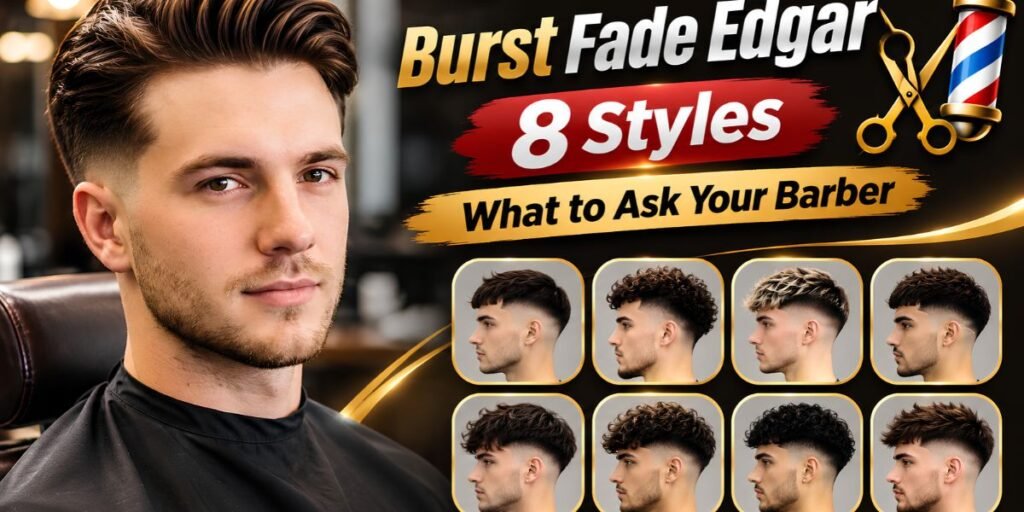
A burst fade Edgar looks simple in a photo, but it is really two haircuts joined together. The front has a blunt, cropped fringe, and the sides curve around each ear in a half circle. If you ask for an Edgar cut with burst fade by name alone, two barbers can read it in two different ways. This guide helps you close that gap and get the exact cut you saw.
Below you will find eight styles, from a low burst fade Edgar to a skin finish, plus a clear comparison with taper and drop fade versions. You will also learn how hair type and face shape change the result, how to style it at home, and how often to rebook. A saveable barber request near the end gives you the right words to use at your next appointment.
What is a burst fade Edgar?
A burst fade Edgar joins an Edgar fringe with a burst fade on the sides. The Edgar part is a short, blunt, straight-across fringe that sits on the forehead, usually over a cropped top. The burst part is a fade that curves in a semicircle around each ear, so the sides step down in an arc instead of a straight line. Together they create a sharp, high-contrast look that stays neat from the front and the side.
The two parts control different areas, which is why one photo rarely tells the full story. The fringe sets the front view, while the burst sets the sides and the back. The cut is often linked with Mexican-American barbershop culture, and the modern Edgar haircut now comes in many versions, from a classic burst fade Edgar with a sharp line up to softer, textured takes. Always check front, side, and back angles before you save a reference.
Eight burst fade Edgar styles to show your barber
Not every burst fade Edgar looks the same, and the right style depends on your hair, your face, and how much time you want to spend on it. The eight styles below cover the most common requests, from soft and low to sharp and skin-short. Treat each one as a starting point, because words like low, short, and fluffy describe a look and not an exact clipper setting.
Must Read This 16 Best Mid Taper Fade Short Hair Styles for Men (2026)
For each style, point at the one detail you care about most in your photo. That might be where the fade starts, how long the top stays, or how much length remains at the back. Barbers work visually, so a clear pointer saves you from a haircut that is close but not quite right. Use the table to compare all eight of the best burst fade Edgar styles before you read the details.
| Style | Best for | Fade height | Upkeep |
|---|---|---|---|
| Low | Soft contrast, school, and office | Low | Every 3 to 4 weeks |
| Short textured | Thick or straight hair, quick mornings | Mid to high | Every 2 to 3 weeks |
| Fluffy | Thick or wavy hair with natural volume | Mid to high | Every 3 weeks |
| Curly | Curls and coils that need shape | Low to mid | Every 3 to 4 weeks |
| Mullet | A bold look with extra length at the back | Mid | Every 3 to 4 weeks |
| Mid | An all-round, balanced cut | Mid | Every 2 to 4 weeks |
| High | Maximum contrast and a classic Edgar feel | High | Every 2 to 3 weeks |
| Skin | The cleanest, boldest finish | Any height, shortest at skin | Every 1 to 2 weeks |
Low burst fade Edgar

A low burst fade Edgar starts just above the ear and makes a gentle curve, so more side hair stays than in the usual high version. The contrast is softer, which suits school, office, and family settings. It also grows out more kindly, so you can stretch the time between visits. Ask where the fade begins and how much hair should stay above it, and bring a side photo that shows the arc clearly. This is a smart first step if you are new to the Edgar haircut.
Short textured burst fade Edgar
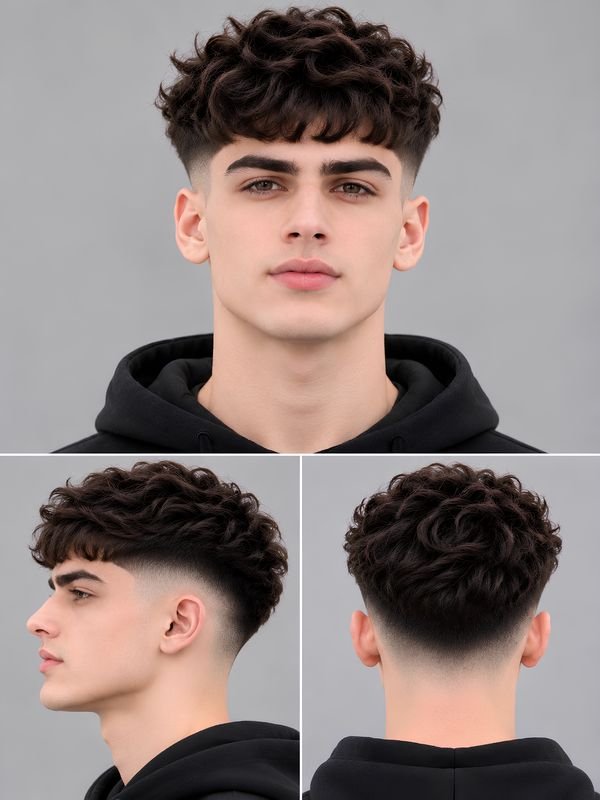
The short textured burst fade Edgar swaps a flat, heavy top for a choppy, cropped one. That texture stops the fringe from looking like a bowl cut, which is the main risk with a very blunt Edgar. Ask your barber how they plan to cut the texture and where the fringe will land once your hair is fully dry. It works well on thick or straight hair and takes under five minutes to style with a little clay or paste.
Fluffy burst fade Edgar

A fluffy burst fade Edgar keeps the top fuller and softer, with a slightly rounded shape that sweeps forward. It is a favorite for people with thick or wavy hair, because the natural volume does most of the work. Bring a photo of the finish you want and ask how much lift your own hair can make. A messy burst fade Edgar is a close cousin, where the fringe is a little broken up for a relaxed, lived-in look.
Curly burst fade Edgar
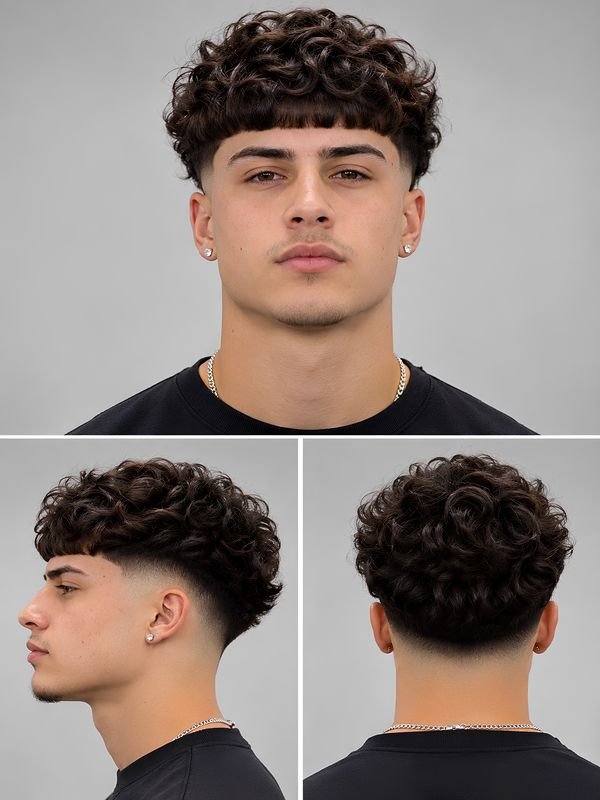
Curly hair and the burst shape go together well, because the fade tidies the sides and lets the top keep its length and bounce. A curly burst fade Edgar still needs a defined fringe line, so the front should look planned and not just grown out. Check a dry, front-facing photo of someone with your curl type before you save it. Ask your barber to shape the curls dry, since curls can spring up shorter than they look when wet.
Edgar burst fade mullet

A burst fade mullet pairs the burst with extra length at the back. The sides stay short and sharp, while the neckline holds enough hair to show a tail. In this version of the burst fade Edgar, the blunt fringe stays at the front, so the cut feels bold from every angle. Bring side and back photos that show the length you mean, and agree where the outline ends at the nape. Not every grown-out back counts as a mullet, so be exact.
Mid burst fade Edgar
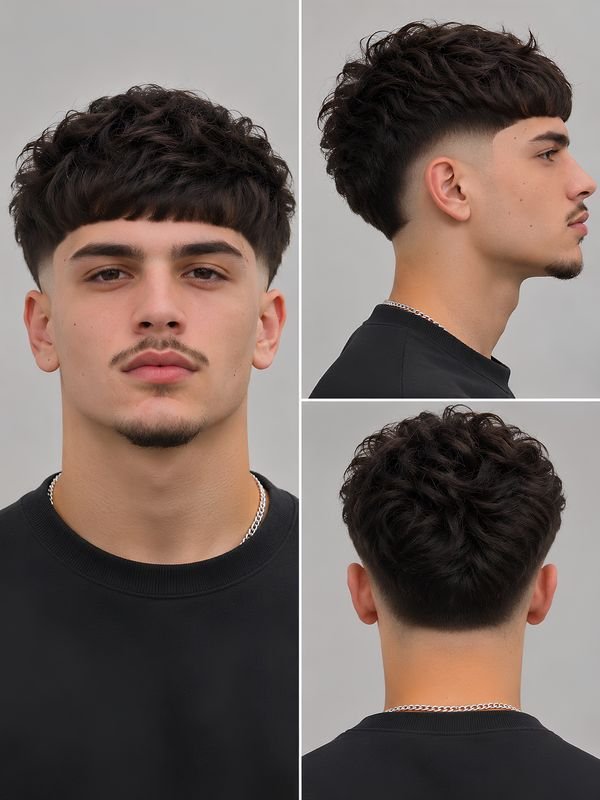
A mid burst fade Edgar starts the arc around the middle of the sides, which makes it the most balanced choice. It gives clear contrast without the extreme look of a high fade, so it suits most face shapes and fringe lengths. This is a safe pick if you cannot decide between low and high. Ask your barber to show where the arc will begin, and say how much hair should stay above it. It also pairs well with a beard or a small design.
High burst fade Edgar
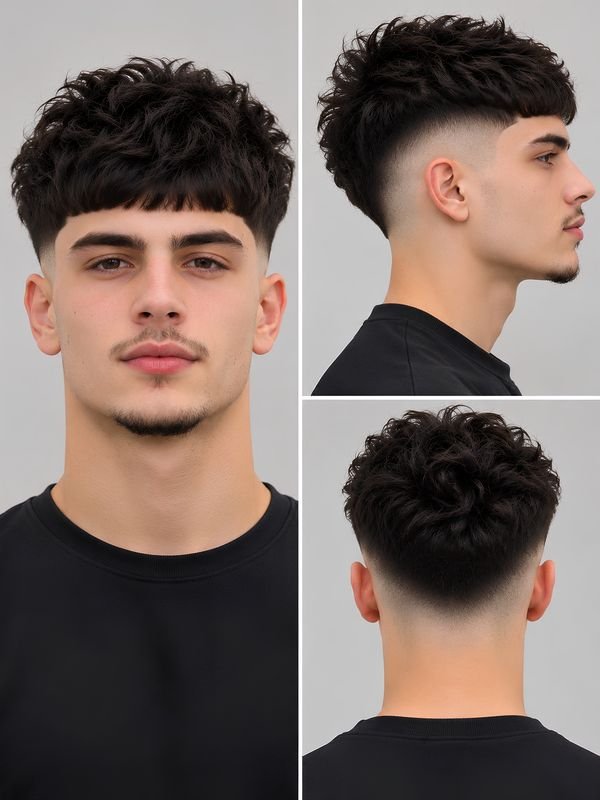
A high burst fade Edgar lifts the arc close to the top of the head, which creates the strongest contrast and the most classic Edgar look. The short sides make the blunt fringe stand out, so it suits people who want a bold, sharp cut. Because the fade is shorter, it needs a cleanup every two to three weeks. Ask for a clean line up at the front, and agree how far back the burst should reach behind the ear.
Skin burst fade Edgar
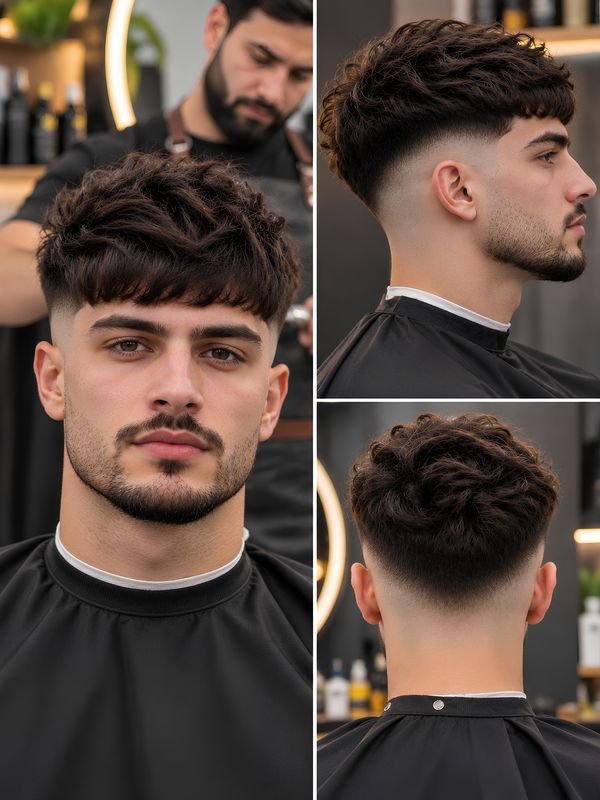
A skin burst fade Edgar takes the shortest part of the fade down to bare skin for the cleanest, boldest finish. The arc looks crisp around the ear, and the blunt fringe above it stands out even more. The trade-off is upkeep, because regrowth shows fast and many people rebook every one to two weeks. Say clearly that you want skin and not shadow, since barbers can read those words differently. Ask for a mid or high start if you want extra contrast.
Burst fade Edgar vs. taper Edgar vs. drop fade Edgar: what changes?
Only the sides and back change between these three cuts. The fringe and cropped top can stay exactly the same, which is why the side photo decides the result. A burst fade Edgar curves around the ear and can leave length at the back. A taper Edgar shortens the hair more gradually and keeps more length, while a drop fade Edgar dips lower behind the ear and follows the curve of your head.
Names are not standardized, and many people, barbers included, use taper and fade as if they mean the same thing. That is why a burst fade vs taper fade Edgar conversation goes best with photos and a few clear words. Describe the shape you see, not just the label. A taper burst fade Edgar is a handy middle ground if you want the arc without a high-contrast finish.
| Option | Side shape | Back and neckline | What to ask |
|---|---|---|---|
| Burst fade Edgar | Fade arcs in a semicircle around the ear | Neckline and back can keep length | Where does the arc start, and how long does the back stay? |
| Taper Edgar | Length shortens gradually toward the hairline | Tapers toward the neckline, less dramatic than a fade | Should the shortest point be skin or just short? |
| Drop fade Edgar | Fade curves down behind the ear | Dips lower at the back, following the head | How far should it drop behind the ear? |
Will a burst fade Edgar work with your hair?
A burst fade Edgar can work on most hair types, but it is a conversation with your barber and not a yes-or-no rule. Four things matter most: curl pattern, strand thickness, density, and growth direction. Together they decide whether your hair can hold a blunt fringe and a defined top. A thick hair burst fade Edgar usually holds its shape best, while fine hair needs a little more planning. Show up with dry, unstyled hair so the barber can see how it really behaves.
Hair that grows in different directions can still work, but it needs a smart plan. A strong cowlick at the front hairline can push the fringe sideways, and one at the crown can lift the top. Ask your barber to check these spots before the clippers touch your head. If they suggest a slightly longer fringe or a softer line, that is usually good advice and not a refusal.
- Curl pattern: decides how the fringe lies and how short the dry length looks.
- Strand thickness: thicker strands hold a blunt line, while fine strands need softer edges.
- Density: lower density needs more length at the front to avoid see-through spots.
- Growth direction: cowlicks and whorls change how the fringe and sides sit.
Must Read This High Taper Fade Curly Hair: Best Trendy Looks for Men 2026
Straight and wavy hair
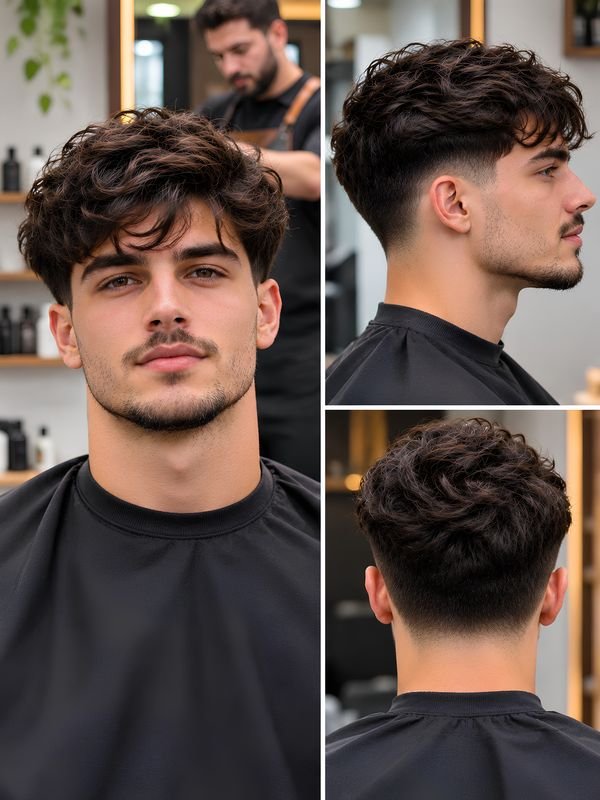
Straight hair shows every line, so a straight hair burst fade Edgar looks very clean, but any uneven blend is easy to spot. A sharp, blunt fringe also sits well on straight strands. Wavy hair adds movement that can fight a dead-straight fringe, so ask whether your waves will push the line out of place. A wavy hair burst fade Edgar often looks best with a little texture instead of a forced flat finish. Check whether your reference photo shows the cut styled or air-dried.
Curly and coily hair
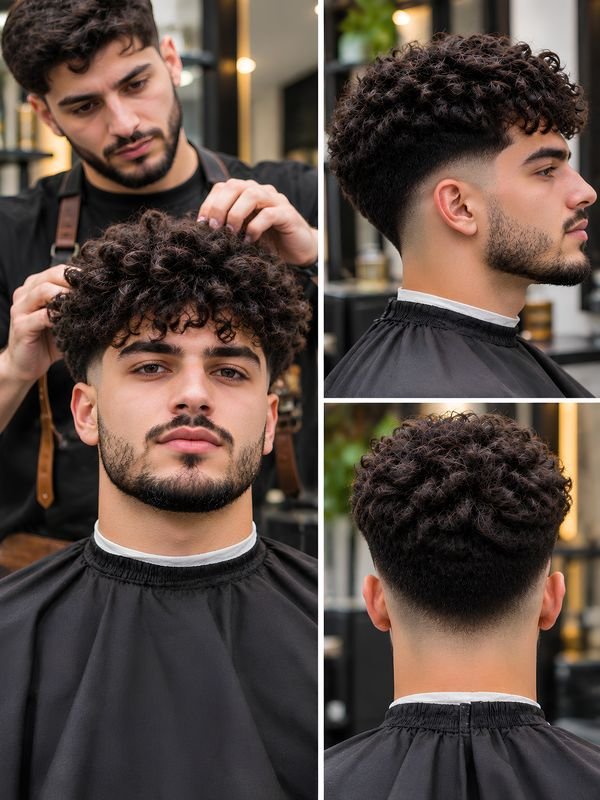
Curly and coily hair can look noticeably shorter once it dries, so describe the fringe and top as you want them dry. The sides are less of a risk, because the burst technique follows your natural growth pattern. Pick a reference from someone with a similar texture, since the same cut looks different on straight and coily hair. When you book a new barber, ask if they regularly cut your curl type. That one question keeps your burst fade Edgar from turning into a surprise.
Fine hair, low density, and growth patterns

Fine hair and low density are not the same problem. Fine means each strand is thin, while low density means fewer strands cover the scalp. If you can see scalp from above, ask how the fringe will fill in, because a very short top can show gaps. A skilled barber may leave a little more length at the front to cover them. Cowlicks come from the angle of the follicle and cannot be cut away, so plan around them. If thinning is sudden, see a dermatologist.
How should you adapt it to your face and head shape?
Face and head shape are preferences to discuss, not strict rules. Three choices change the look the most: how much forehead the fringe covers, how much of the sides show, and how much height sits on top. A burst fade Edgar for a round face often works well with a higher burst and extra height on top, which adds a longer line. An oval face is flexible, so you can try almost any version.
For softer contrast, place the burst lower and finish at a shadow length instead of skin. For sharper contrast, raise the burst and go to skin. To change forehead balance, adjust the fringe length or the top height and leave the fade alone. A burst fade Edgar for an oval face can start with a mid burst and a medium-length fringe. Before any cutting, ask your barber to show where the burst will begin and where the fringe will land.
- Round face: a higher burst and extra height on top add a longer line.
- Oval face: a mid burst with a medium fringe is an easy, balanced start.
- Square face: a slightly softer fringe line can balance a strong jaw.
- Long face: keep the fringe a little lower on the forehead and avoid too much height.
How do you ask your barber for a burst fade Edgar?
Ask for a burst fade Edgar with front, side, and back photos instead of relying on the name alone. Say what you like in each photo, because a picture handed over without comment can be read many ways. Describe the look you want and avoid dictating clipper guards, since barbers use different numbers. Then ask them to repeat the plan back to you before they start cutting.
Arrive with dry, unstyled hair and a clear idea of your non-negotiables. A sharp line up Edgar haircut needs a clear front hairline, so say whether you want crisp edges or a softer finish. If you wear a beard, agree how the sideburns will connect to it. If you want a line or pattern shaved into the burst, settle that first, since a burst fade Edgar with design needs extra planning time.
The six details to agree before cutting
Six details settle almost every misunderstanding: the fringe, the top, the temples, the burst, the shortest length, and the nape. Agree on each one before the clippers start, and point to them on your photos as you go. This takes two minutes and can save you weeks of regret. The lists below split the details into the front of your head and the sides and back, so you can follow along with your reference. Together they turn one vague burst fade Edgar photo into a clear plan.
Front and top
- Fringe: blunt or textured, and where it should sit on your forehead when dry.
- Top: how long it should be when dry, and whether texture is cut in or left natural.
- Front and temples: a crisp line up or a softer edge. If a cowlick pushes your hair sideways, say where and which way.
Sides and back
- Burst: where the arc starts above the ear and how far back it reaches.
- Shortest length: skin, shadow, or something longer. This is a separate choice from fade height.
- Back and nape: how much length stays, and whether the outline is rounded, tapered, or squared.
A saveable barber request
Copy the template below, fill in the brackets, and save it with your photos on your phone. It is a template and not a rulebook, because your hair may not manage every detail. A good barber will tell you what is realistic and suggest the closest workable version. A written note also helps if the barber is new to you or the shop is busy. Keep it short, and show the photos next to it so nothing gets lost.
- Fringe: [blunt or textured], sitting at [point on forehead] when dry
- Top: [length when dry], texture [cut in or natural]
- Front and temples: [crisp line up or soft edge]
- Burst: starting [low, mid, or high], reaching [distance behind the ear], finishing at [skin, shadow, or longer]
- Back and nape: keep [length], outline [rounded, tapered, or squared]
- Non-negotiable: [one or two details]
- Do not remove: [what to keep]
How do you style a burst fade Edgar at home?
Styling a burst fade Edgar takes only a few minutes. Start with clean, damp hair, then dry the fringe forward on low or medium heat so it lies flat across the forehead. Use as little product as the look needs, because too much can weigh the fringe down. Begin with one product and add a second only if the top still falls flat. Wavy and curly hair usually does better with a diffuser, which helps those textures keep their shape.
Finish once your hair is fully dry, since adding product to wet hair can make a mess of the fringe. If you want to know how to style a burst fade Edgar with extra volume, a pinch of styling powder at the roots adds lift without stiffness. Keep the routine below simple, and ask your barber to demonstrate it on your own hair at your next visit.
- Towel-dry gently and avoid rough rubbing, which can damage hair.
- Work a fingertip of light-hold clay or paste into damp hair if you need grip.
- Dry the fringe forward on low or medium heat, using a heat protectant.
- Add a little powder at the roots for lift, and build it up slowly.
Must Read This 30 Best Mid Taper Fade Blowout Haircuts for Men (2027)
How often does a burst fade Edgar need maintenance?
Most people book a fade cleanup every two to four weeks, while the fringe and top can often wait longer. The arc around the ear, not the top, usually sets the schedule. A skin version shows regrowth fastest and may need a visit every one to two weeks. A lower fade with a longer transition grows out more gently, so a low burst fade Edgar can stretch toward four weeks between cuts.
Book the service that matches what has grown out, and let your comfort with softness set the pace. Maintenance of a burst fade Edgar haircut comes down to three jobs, listed below. Tell your barber which one you need when you book, so the appointment fits the work. If your budget is tight, choose a lower fade, since it hides regrowth better.
- Fade cleanup: the area around your ears and neckline looks fuzzy, or the blend has lost its smooth transition.
- Fringe adjustment: the fringe no longer sits at the length or line you agreed.
- Full reshape: the sides and top have both drifted, or you want a change.
What should you do if the cut doesn’t look right?
Compare the result with what you agreed before asking for more cutting. Put your saved request and photos next to your dry hair, and note which of the six details is different. Check the burst fade Edgar back view in a mirror too, because the nape and the arc are easy to miss from the front. A new cut can take a few days to settle, so wash and style it yourself before you judge it.
Then go back with specifics. Name the exact difference, such as the fringe sitting too high or the burst starting lower than the photo, and leave the fade work to the barber. Ask for a short consultation to see if styling can solve the problem before a correction. Remember that cutting cannot restore removed length, so ask for an honest assessment first and fix things patiently.
Frequently Asked Questions
Can I wear a beard with a burst fade Edgar?
Yes. Ask your barber to blend the sideburns into the beard so the arc flows smoothly into it.
Do I need a perm for a fluffy burst fade Edgar?
No. Natural wave or curl helps, but a diffuser and a little powder can add lift without a chemical treatment.
Can I grow a burst fade Edgar into another haircut?
Yes. As it grows, you can move to a taper, a textured crop, or a longer fringe over a few months.
How much does a burst fade Edgar cost?
Prices depend on your city and barber, so ask before you sit down and mention any design or beard work.
Can I cut a burst fade Edgar myself?
It is risky. The arc and blend are hard to judge on your own head, so a barber is the safer choice.
What is the difference between a burst fade and a drop fade?
A burst curves around the ear, while a drop fade dips lower behind it and follows the shape of the head.
Is a burst fade Edgar suitable for school?
A low version usually is, but check your school rules on fade height and designs first.
Conclusion
A burst fade Edgar is easy to love and easy to misunderstand. The fringe sets the front, the burst sets the sides, and the six details help your barber see both. Whether you pick a low, textured, fluffy, curly, or mullet version, clear photos and a short list of non-negotiables do most of the work. Choose the fade height and finish that suit your hair, your face, and your daily routine.
Keep the upkeep in mind too. A cleanup every few weeks keeps the arc sharp, and a simple home routine keeps the fringe in place. With trendy Edgar haircuts for men still going strong, a well-planned burst fade Edgar haircut in 2027 is a safe choice. Save your request, show your barber your photos, and ask them to repeat the plan before the cut begins.
